
Kids Planners: 13 Best Routine Charts, Chore Charts and Printables
Kids planners turn routines, chores and homework into simple visual steps that children can follow on their own. This list includes big printable bundles, picture-based morning and bedtime routines, an emotion tracker, homework planners, chore charts with rewards, a kids meal planner and a holiday planner. Most are printable pages you can reuse, and a few can be edited in Canva.
Quick Picks
- Best all-in-one bundle: 15 Kids Planner Printable Bundle PDF
- Best morning routine: Kids ADHS Morning Routine Printable
- Best for feelings: ADHS Kids Emotion Tracker Set
- Best for homework: ADHD Homework Planner for Children
- Best for family chores: Family Cleaning & Chore Planner
Kids Planner Bundles
Bundles cover several needs at once, from routines to goals and school.
Best All-in-One Bundle
1. 15 Kids Planner Printable Bundle PDF

Format: Printable PDF
Pages: 15
Size: A4
Best for: parents who want one set for chores, routines and rewards
- Chore chart, responsibility tracker, reward chart and behavior tracker
- Morning and bedtime routine planners
- Screen time tracker, pocket money savings planner and kids meal planner
- Learning goals, exam preparation, homeschool and summer activity planners
Soft pastel colors and cute illustrations make the pages friendly for younger children. Print the pages as often as you need for home, school or daycare.
Best for School-Age Kids
2. 10 Kids Planners Bundle Printables PDF
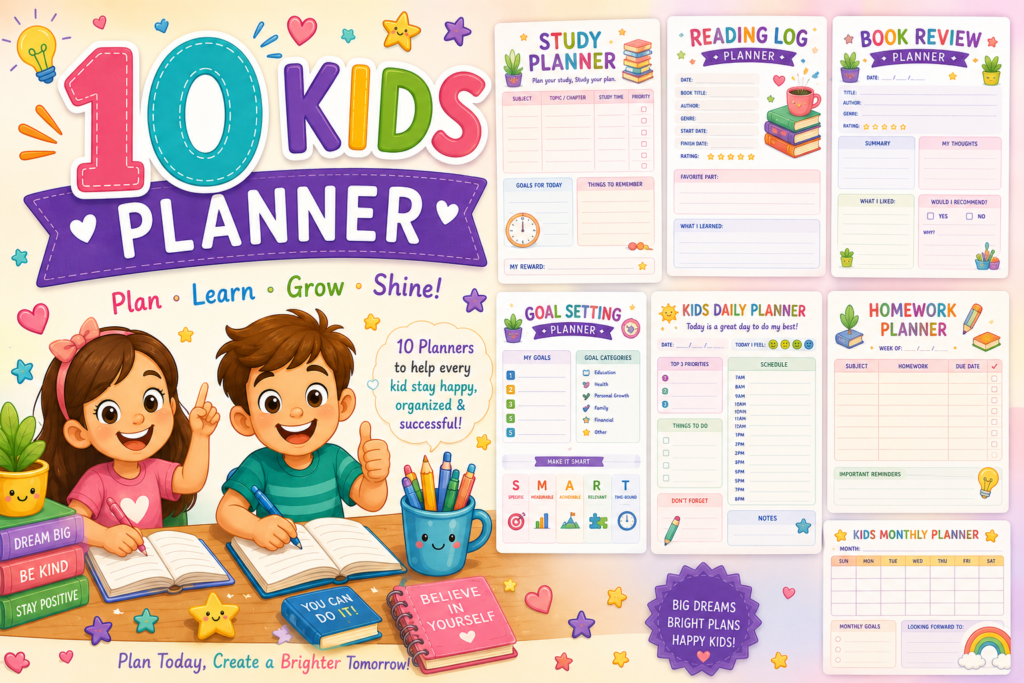
Format: Printable PDF
Size: A4
Best for: students who are learning to plan their own week
- Kids daily, weekly and monthly planners
- Homework planner, study planner and school assignment planner
- Reading log and book review pages
- Goal setting planner and gratitude journal for kids
Pastel, kid-friendly layouts make planning feel like part of the school routine rather than a chore. The pages can be printed again whenever you need a fresh set.
Best Editable Planner
3. Editable ADHD Planner for Kids | Canva
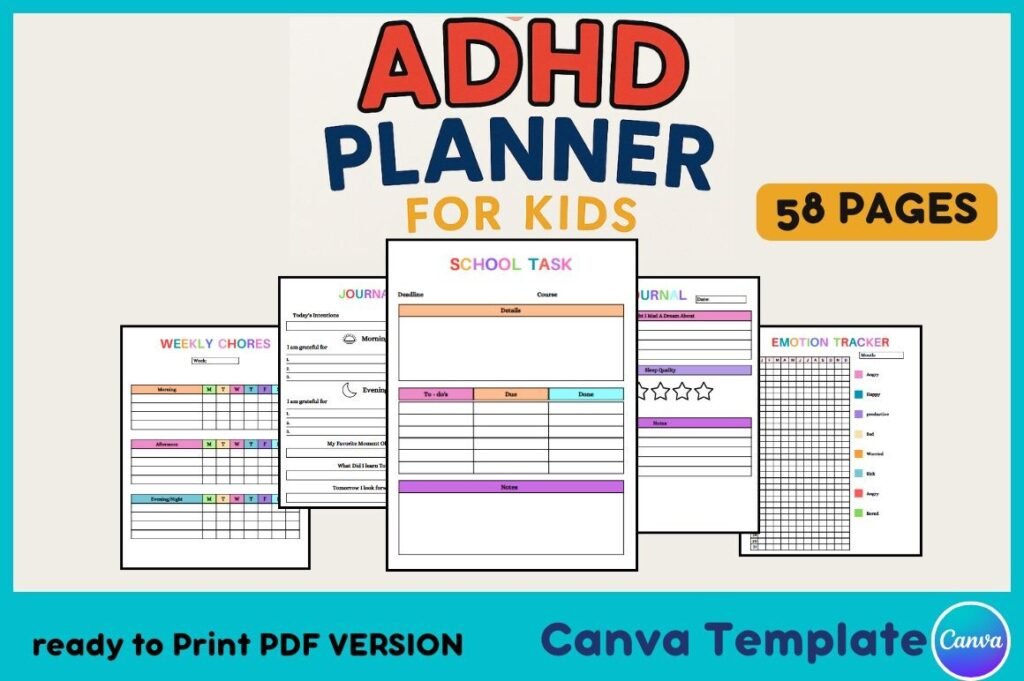
Format: Canva template + PDF
Pages: 58
Ages: 5–12
Best for: parents and teachers who want to adapt pages for each child
- Daily routine pages
- Emotional regulation pages
- Task tracking pages
Colorful, fun pages keep children interested, and the Canva link lets you customize them for different kids or a whole class. Print and bind it, or share digital versions.
Routine Charts and Emotion Trackers
Visual routines and feelings pages help children know what comes next and how to cope.
Best Morning Routine
4. Kids ADHS Morning Routine Printable
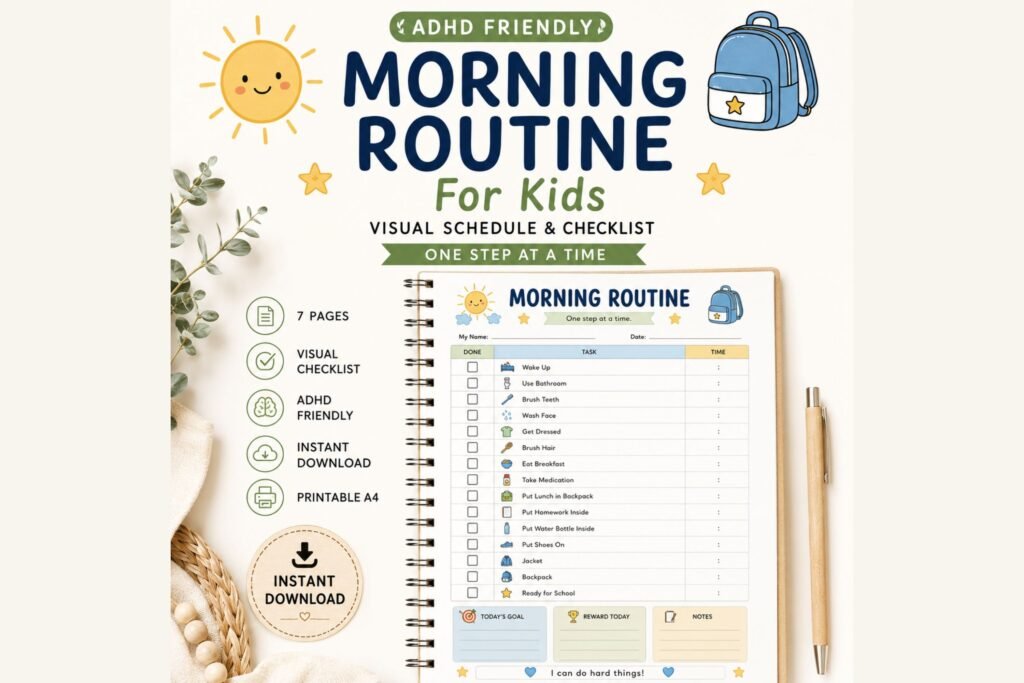
Format: Printable PDF
Pages: 7
Size: A4
Best for: young children who follow pictures better than words
- Visual, picture-based morning checklist
- Daily habit tracker
- Goal, reward and notes sections
- Reusable routine templates
Simple icons let children work through each step on their own, which means fewer reminders on busy school mornings. It suits preschoolers and early elementary kids, including children who benefit from visual structure.
Best Bedtime Routine
5. ADHD Evening Routine Planner

Format: Printable PDF
Pages: 7
Size: A4
Best for: families who want calmer, more predictable evenings
- Evening routine chart, bedtime timeline and visual routine board
- Evening checklist and weekly progress tracker
- Independence reward tracker
- Parent guide with practical routine tips
Laminate the pages and use a dry-erase marker to turn them into a reusable bedtime system. It works for any child who does well with visual routines.
Best for Feelings
6. ADHS Kids Emotion Tracker Set

Format: Printable PDF
Pages: 12
Size: A4
Best for: helping children name and handle big feelings
- Daily and weekly emotion trackers and a weekly check-in
- Emotion triggers explorer and calm-down strategies
- Feelings and needs matching, coping tools list and positive affirmations
- Emotion guide for parents and an emotion reflection journal
The worksheets open gentle conversations about feelings and help children build an emotional vocabulary. They suit parents, teachers, counselors and homeschool families.
Best for Homework
7. ADHD Homework Planner for Children

Format: Printable PDF
Pages: 15
Size: A4
Best for: elementary students who get overwhelmed by homework
- Homework dashboard, weekly overview and homework planner
- Assignment tracker and progress tracker
- Focus tracker and study session planner
- Priority matrix for deciding what to do first
Clean pages with few distractions help children stay on task and plan study time step by step. Print them at home or use them digitally.
Best Free Checklist
8. Free Kids Routine Checklist Canva PDF
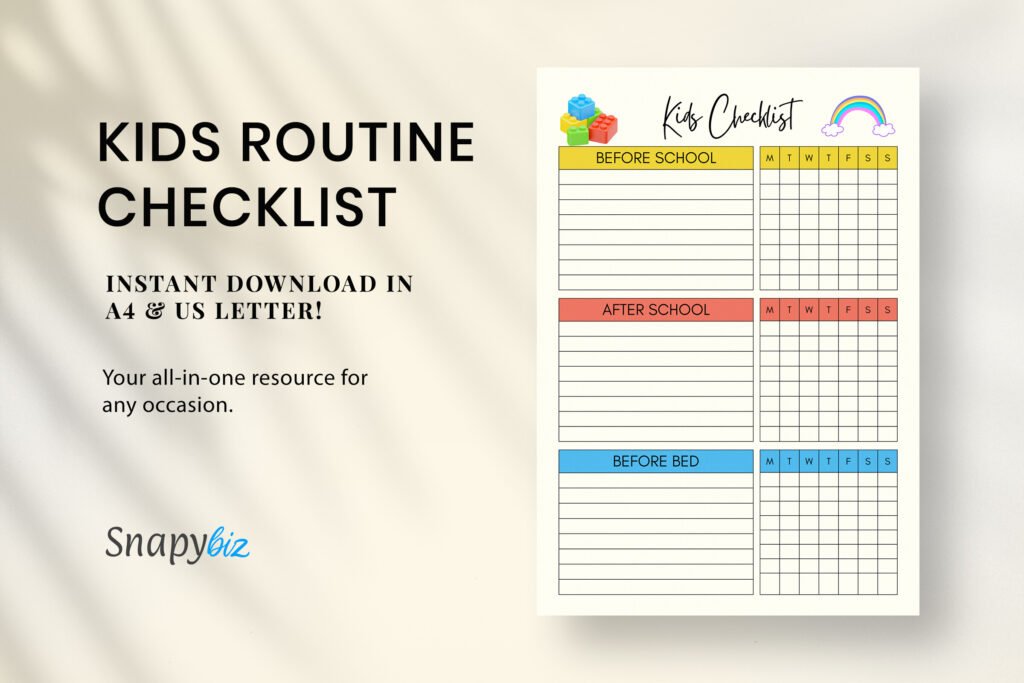
Format: Canva template + PDF
Best for: school mornings and after-school routines
- Daily school checklist and schedule
- Chore chart and daily routine sections
- Editable tasks to fit each child
Children can tick off schoolwork, chores and routines on one page, which builds independence step by step. It also works as a simple homeschool to-do list.
Chore Charts and Family Planning
These pages share jobs at home and make helping out part of the week.
Best for Family Chores
9. Family Cleaning & Chore Planner

Format: Printable PDF
Pages: 17
Size: A4 and US Letter
Best for: sharing housework fairly between parents and kids
- Age-appropriate kids chore ideas and teen chore ideas
- Weekly family chore chart and family reset tracker
- Kids room, toy area and school-area reset pages
- Household responsibility agreement and family cleaning day plan
Instead of one person doing everything, the planner turns cleaning into a shared family system. Morning and evening family resets keep the home tidy in small steps.
Best Simple Chore Chart
10. Printable Kids Daily Chores Chart

Format: Printable chart
Best for: starting a chore routine with younger kids
- Daily tasks such as tidying up, folding clothes and feeding pets
- Reward tracker for completed chores
- Colorful, reusable design
Checking off chores and earning rewards makes daily jobs more fun for children. It works at home or in a classroom.
Best Points System
11. Weekly Chore Chart for Kids – Canva Template

Format: Canva template
Best for: families who like to reward chores with points
- List of chores suitable for kids of all ages
- A point value for each chore
- Points that kids can redeem for rewards
A points system gives children a clear reason to finish their jobs and shows progress over the week. Print it or share it digitally.
Best for Meal Planning
12. Colorful Cute Kids Meal Planner

Format: Printable PDF
Size: A4 and US Letter, landscape
Week start: Sunday or Monday
Best for: planning family meals together with kids
- Weekly meal planner with cute fruit and vegetable illustrations
- Sunday-start and Monday-start versions
- Four PDF files in two sizes
Bright pictures make it easier to involve children in choosing healthy meals for the week. Print as many pages as you need.
Best for School Holidays
13. Summer Planner for Kids Printable
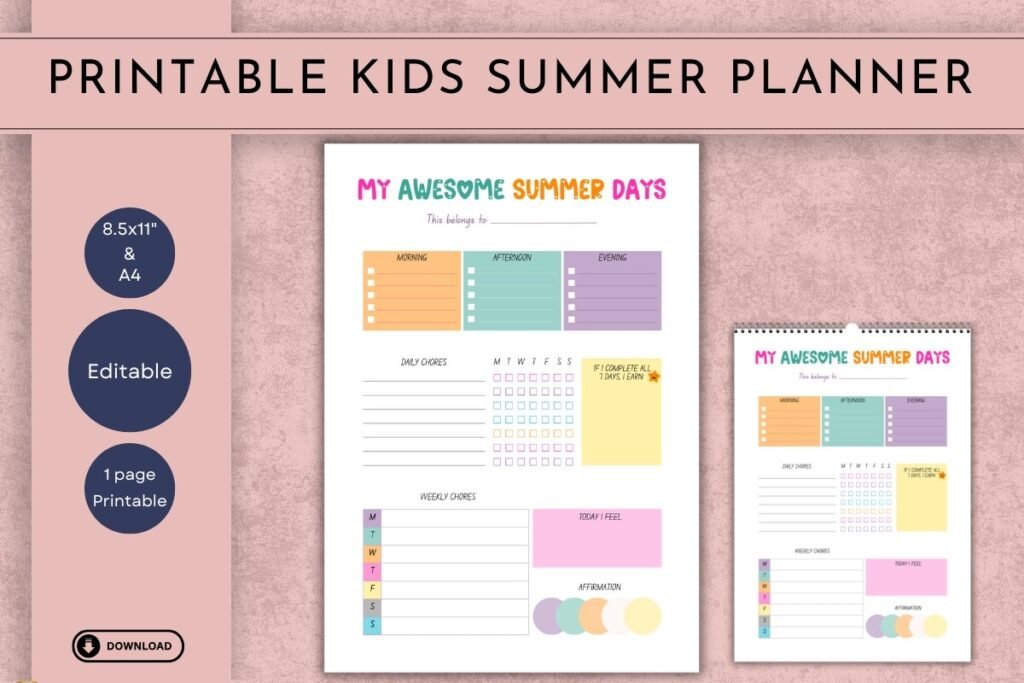
Format: Printable PDF, editable
Pages: 1
Size: US Letter and A4
Best for: keeping a light routine during long school breaks
- Morning, afternoon and evening checklists
- Daily chores tracked across the week and a weekly responsibilities section
- Reward tracker, a daily feelings check-in and affirmation bubbles
It is designed for summer, but the same one-page layout also helps during winter and spring breaks. Structure the day without taking away the holiday fun.
Kids Planners at a Glance
| Type | Best for | Key features | Format |
|---|---|---|---|
| Bundles | Several needs at once | Routines, chores, rewards, school, goals | Printable PDF, Canva |
| Routine charts | Mornings and bedtime | Picture checklists, timelines, reward trackers | Printable PDF |
| Emotion and homework | Feelings and school | Emotion trackers, coping tools, homework planners | Printable PDF |
| Chore and meal charts | Family life | Chores, points, rewards, weekly menus | Printable PDF, Canva |
How to Use a Routine Chart with Kids
- Keep it short. Three to six steps per routine is easier for children to remember.
- Use pictures for young kids. Icons work better than words for children who are still learning to read.
- Put it where it is used. Hang the morning chart by the bathroom or front door and the bedtime chart in the bedroom.
- Laminate and reuse. A dry-erase marker lets children tick off steps every day.
- Praise effort, not perfection. Small rewards and kind words keep children motivated.
- Review together each week. Adjust tasks as your child grows more independent.
FAQ
At what age should a child use a planner?
Picture routine charts work from about age three, while simple daily planners and chore charts suit children from around six. Older elementary students can start using homework and weekly planners on their own.
What chores can a 7 year old do?
Many 7-year-olds can make their bed, tidy their room, set the table, feed pets and help fold laundry. Choose a few tasks, show your child how to do them and add them to a chore chart.
Do visual schedules help kids with ADHD?
Many families and teachers find that visual schedules make routines more predictable and reduce reminders. Pictures, short steps and clear check-off boxes help children see what to do next.
Should kids get rewards for chores?
Rewards can help children build a new habit, especially at the start. Many parents use points or small privileges and slowly shift the focus to helping as part of the family.
When should I talk to a professional about my child’s attention or emotions?
Planners and charts can support routines, but they do not replace professional advice. If attention, behavior or emotional difficulties affect school, friendships or family life over several weeks, talk to your pediatrician, the school counselor or a licensed child psychologist.
Final Thoughts
The best kids planners are simple enough for children to use on their own and fun enough that they want to. Start with one routine chart or chore chart, keep it in a visible spot and add more pages as your child grows. For background on how children grow and learn new skills, see this article on child development.