

Period Trackers: 16 Best Printable and Digital Cycle Trackers
A period tracker helps you learn your own rhythm: when your period starts, how long it lasts and which symptoms come with it. This list includes a period tracker printable with monthly symptom pages, Google Sheets and Excel trackers, ovulation pages, a yearly period log and cute period stickers for planners.
Quick Picks
- Best period tracker printable: Period & Cycle Tracker Printable
- Best period tracker spreadsheet: Period Cycle Tracker Template
- Best ovulation tracker: Period Tracker Printable PDF
- Best symptom and mood tracker: Period Tracker – Printable and Digital Menstrual Planner
- Best period stickers: Kawaii Period Reminders Planner Stickers
What to Track in a Period Tracker
- Start and end dates: the basis for working out cycle length.
- Flow: light, medium or heavy on each day.
- Symptoms: cramps, headaches, bloating, skin changes and sleep.
- Mood and energy: how you feel across the cycle.
- Cravings and appetite: useful for spotting PMS patterns.
- Notes for your doctor: anything unusual you want to ask about.
Period Tracker Printables and Spreadsheets
Best Period Tracker Printable
1. Period & Cycle Tracker Printable

Pages: 20
Format: Printable + fillable PDF
Size: US Letter and A4
Best for: anyone who wants a full picture of their cycle
- Cycle log for 24 cycles and a period year view
- 12 monthly trackers: flow, cramps, headache, bloating, mood, energy, skin, cravings, sleep
- My comfort plan page
- Notes for my doctor and general notes
Monthly pages show how symptoms change across the cycle, which makes patterns easier to see. The notes for my doctor page keeps questions ready for an appointment. It is undated, so you can start any month and print as many copies as you need.
Best Period Tracker Spreadsheet
2. Period Cycle Tracker Template

Works with: Google Sheets, Excel, Apple Numbers
Tabs: 3: Start Here, Cycle Log, Dashboard
Best for: people who like numbers to update on their own
- Cycle log with every formula already written
- Dashboard with average cycle length and average period days
- Next predicted start date
- Sample data you can clear or type over
Type in your dates and the dashboard does the math for you. A Start Here tab explains every column, so setup takes minutes rather than an evening.
Best Ovulation Tracker
3. Period Tracker Printable PDF

Files: 6 PDFs
Size: A5, A4 and US Letter
Best for: tracking ovulation and fertility signs alongside the period
- Period tracker pages
- Menstrual cycle planner
- Ovulation and fertility tracker
- Planner inserts in three sizes
Three sizes fit ring planners, binders and loose sheets. Keep the period and ovulation pages side by side to see the whole cycle at once.
Best Symptom and Mood Tracker
4. Period Tracker – Printable and Digital Menstrual Planner

Format: Printable PDF + digital
Size: US Letter and A4
Apps: GoodNotes, Notability
Best for: spotting PMS patterns and irregular cycles
- Monthly period tracker
- Symptom and mood log, flow intensity chart
- PMS and cravings tracker
- Cycle length overview, notes and irregularities
Tracking cramps, cravings and mood together helps you notice what tends to happen before a period. Print it or use the digital version on a tablet.
Best Yearly Period Log
5. Yearly Period Log

Pages: 1
Format: PDF + PNG
Size: A4
Best for: a quick visual overview of the whole year
- 31 days across 12 months on one page
- Hand-drawn cat illustration
- Clean line-art layout
One page shows the whole year, so it is easy to compare months. Add the PNG to a digital planner or print it for a wellness binder.
Best Google Sheets Tracker
6. BOSS LADY MENSTRUATION TRACKER

Format: Google Sheets
Best for: daily logging on a phone or laptop
- Date and cycle day
- Flow, mood and energy dropdown menus
- Space to customize the tracker
Dropdown menus keep entries quick and consistent. Over a few months the data shows patterns in your cycle and symptoms.
Best Excel Period Tracker
7. Simple Period Tracker I Excel
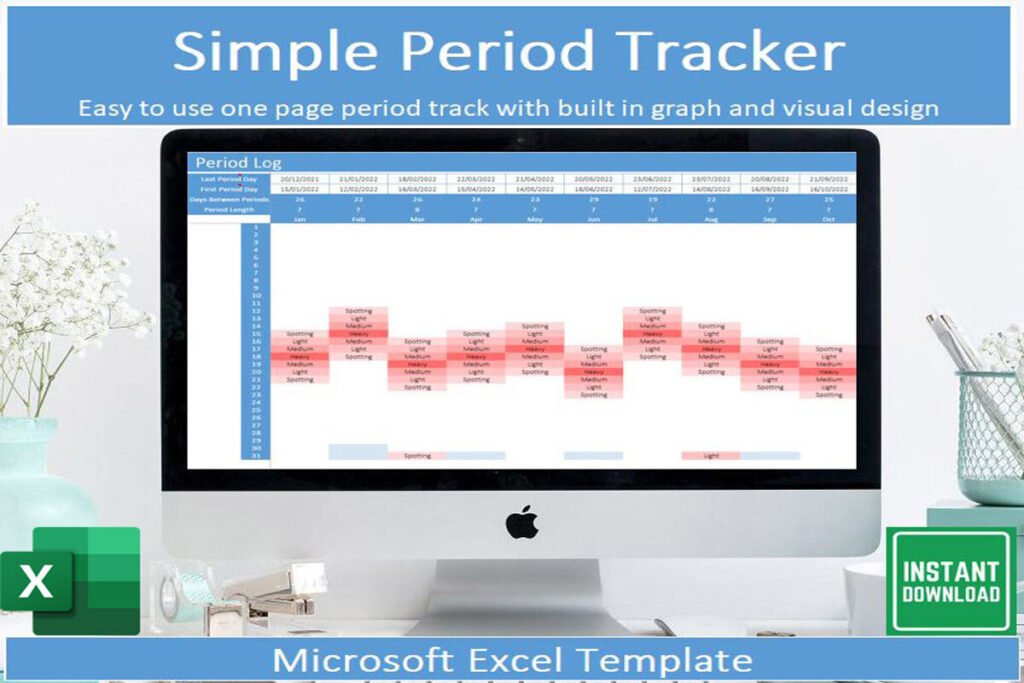
Format: Microsoft Excel
Extras: Instructions included
Best for: people who prefer Excel on desktop or mobile
- Visual tracker tab
- Symptoms checklist with dropdown lists
- Automatically updating graph
The graph updates as you add entries, so changes are easy to see. Use it in the free Excel app on a phone.
Best Editable Period Tracker
8. Printable Period Tracker

Pages: 1
Format: PDF + PNG + Canva
Size: A4
Best for: people who want to change colors and text
- Ready-to-print PDF
- PNG for digital planners
- Editable Canva template, free account works
Change colors, fonts or layout in Canva, then print or use it digitally.
Best Cute Period Tracker
9. Period Tracker Monthly, Yearly

Format: PDF + PNG
Resolution: 300 dpi
Best for: a simple, cute monthly and yearly view
- Monthly period tracker
- Yearly overview
- Print or use on a tablet
A light, friendly layout makes tracking feel less like a chore.
Best Planner Insert
10. A4 and Letter Size Period Tracker Sheet

Format: PNG
Size: A4 and US Letter
Best for: adding a period page to an existing planner
- Minimal, clear design
- Two sizes included
- Print as often as needed
A clean insert slips into the planner you already use.
Period Stickers and Calendars
Best Period Stickers
11. Kawaii Period Reminders Planner Stickers

Format: PDF, JPG, PNG, Silhouette file
Size: US Letter, prints on A4
Best for: marking period days in a paper planner
- Cute kawaii reminder stickers
- Files for Cricut and Silhouette cutting
- Print and cut at home
Small stickers make period days easy to spot in a weekly or monthly spread.
Best Digital Period Stickers
12. Period Tracker Stickers Set

Stickers: 68
Format: PNG, JPG, PDF
Best for: digital planners and printed planners
- 68 individual PNG stickers
- Printable or for digital use
- Wide range of designs
Drop the PNG stickers into GoodNotes or print them for a paper planner.
Best Period Calendar
13. Menstrual Period Calendar

Format: PDF
Size: US Letter
Best for: a printable monthly calendar with matching stickers
- Monthly menstruation calendar
- Matching sticker set
- Sized to fit any planner
Mark each period on the calendar and decorate with the matching stickers.
More Period Trackers to Consider
Health, wellness and medical planners with period tracker pages inside.
Best Health Planner with Cycle Pages
14. Custom Health & Fitness Planner

Format: Printable PDF + digital
Size: US Letter and A4
Best for: tracking the cycle together with fitness and nutrition
- Period and cycle tracking
- Symptom and medication tracker
- Workout log, meal planner, water and sleep log
- Fitness goals and body progress
Cycle pages sit next to workouts and meals, so you can see how they affect each other.
Best Wellness Planner
15. Health and Wellness Planner Printable

Pages: 13
Size: US Letter, A4 and A5
Best for: a small all-round wellness binder
- Period tracker and sleep tracker
- Mood tracker and habit trackers
- Meal plan, grocery list, workout and vitamin trackers
Thirteen pages cover cycle, sleep, mood and habits in one short set.
Best Medical Records Planner
16. Medical Planner

Format: PDF
Size: A4, A5 and US Letter
Best for: keeping family health records together
- Period tracker
- Appointment calendar, illness and symptom tracker
- Blood pressure and blood sugar trackers
- Family health history, immunization and lab records
Keep cycle notes with the rest of your medical records, ready for appointments.
Period Trackers at a Glance
| Type | Best for | Key features | Format |
|---|---|---|---|
| Printable trackers | Paper planners and binders | Monthly symptoms, year view | PDF, fillable PDF |
| Spreadsheets | Automatic averages | Cycle length, next start date, graphs | Google Sheets, Excel |
| Digital trackers | Tablets | Mood, PMS, flow | GoodNotes, Notability |
| Stickers and calendars | Decorating planners | Reminder stickers, monthly calendar | PNG, PDF |
FAQ
How do I track my period on paper?
Mark the first day of bleeding as day 1, note each day of flow, and count the days until the next period starts. A monthly page with symptom rows makes it easy.
How do you calculate your cycle length?
Count the days from the first day of one period to the day before the next period starts. Averaging several cycles gives a better picture.
Can a period tracker be used as birth control?
No. A tracker is for your own records and awareness. Talk to a doctor or nurse about reliable contraception.
What symptoms should I track during my cycle?
Common ones are cramps, headaches, bloating, mood, energy, sleep, skin changes and cravings. Add anything you notice often.
When should I see a doctor about my period?
See a doctor or gynecologist if periods suddenly change, are very heavy or very painful, come less than about 21 or more than about 35 days apart, stop for several months without pregnancy, or if you bleed between periods. Bring your tracker to the appointment.
Final Thoughts
A period tracker turns scattered memories into clear notes you can rely on. Pick a printable, a spreadsheet or a sticker set that fits how you plan, and keep it going for a few cycles to see your patterns. To learn more, see this article on the menstrual cycle.