Debt Payoff Planners: 11 Best Snowball and Avalanche Trackers
A debt payoff planner turns a scary total into a clear plan: list every debt, choose the snowball or avalanche method and color in your progress as balances go down. This list includes printable and fillable debt trackers, snowball and avalanche workbooks, editable Canva debt planners, Google Sheets and Excel debt spreadsheets, a 2027 digital debt planner for iPad, a one-page tracker and a sinking funds tracker to stop new debt from building up.
Quick Picks
- Best debt payoff workbook: Debt Payoff Tracker Printable & Fillable
- Best detailed debt plan: Debt Payoff Planner Canva Template
- Best digital debt planner: Debt Payoff Planner 2027 Portrait
- Best debt-free countdown: Debt Payoff Tracker Template
- Best sinking funds tracker: Sinking Funds Tracker Printable
Debt Payoff Planners and Printable Trackers
Choose a method, track every payment and watch your balances shrink.
Best Debt Payoff Workbook
1. Debt Payoff Tracker Printable & Fillable
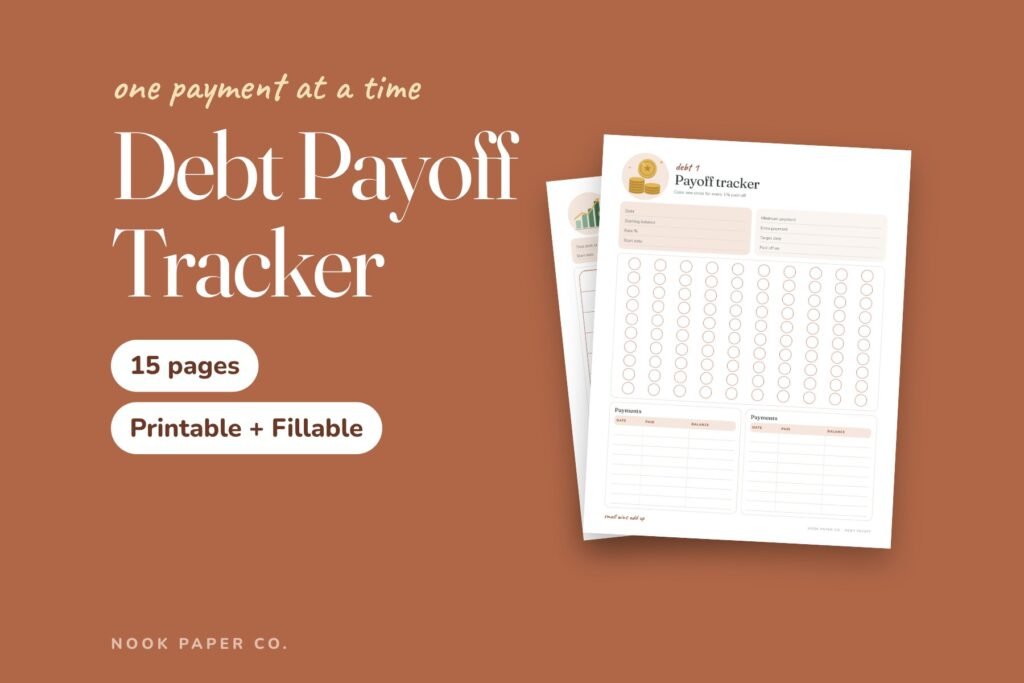
Format: Printable PDF + fillable PDF
Pages: 15
Size: US Letter and A4
Best for: choosing a payoff method and staying motivated
- Snowball or avalanche guide
- Debt list with balance, rate, minimum and due day
- 6 tracker pages with 100 color-in circles
- Debt thermometer, found money log and debt-free celebration page
Coloring in circles turns a long payoff into small wins. The found money log shows how extra cash can speed things up.
Best Size Options
2. Debt Payoff Planner Payment Tracker

Format: Printable PDF
Size: A4, US Letter and A5
Colors: 3
Best for: fitting a debt tracker into any planner size
- Debts and creditors
- Balances and monthly payments
- Payoff goals and progress
Three sizes fit a binder, a desk planner or a small A5 notebook. Three color options let you match your other pages.
Best Detailed Debt Plan
3. Debt Payoff Planner Canva Template
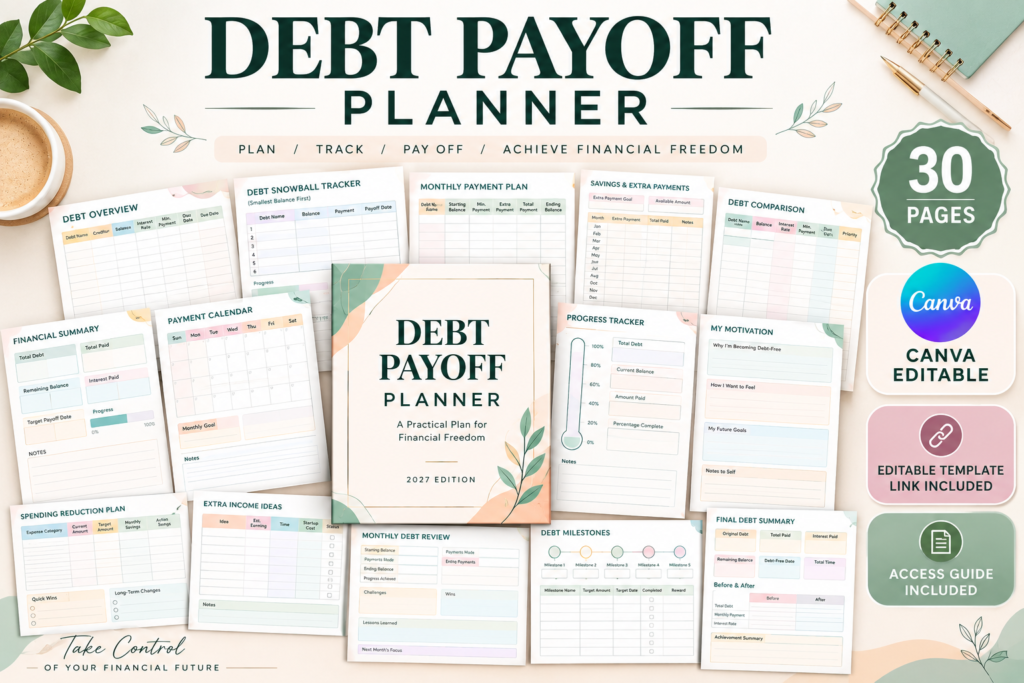
Format: Canva + printable PDF
Pages: 30
Size: US Letter
Best for: people with several debts who want a step-by-step plan
- Debt overview, snapshot and priority plan
- Creditor details, interest rate and minimum payment trackers
- Extra payment plan and monthly debt payment plan
- Debt snowball and avalanche trackers
Tracking interest rates next to balances helps you see which debt costs the most. Edit fonts and colors in Canva before printing.
Best Digital Debt Planner
4. Debt Payoff Planner 2027 Portrait
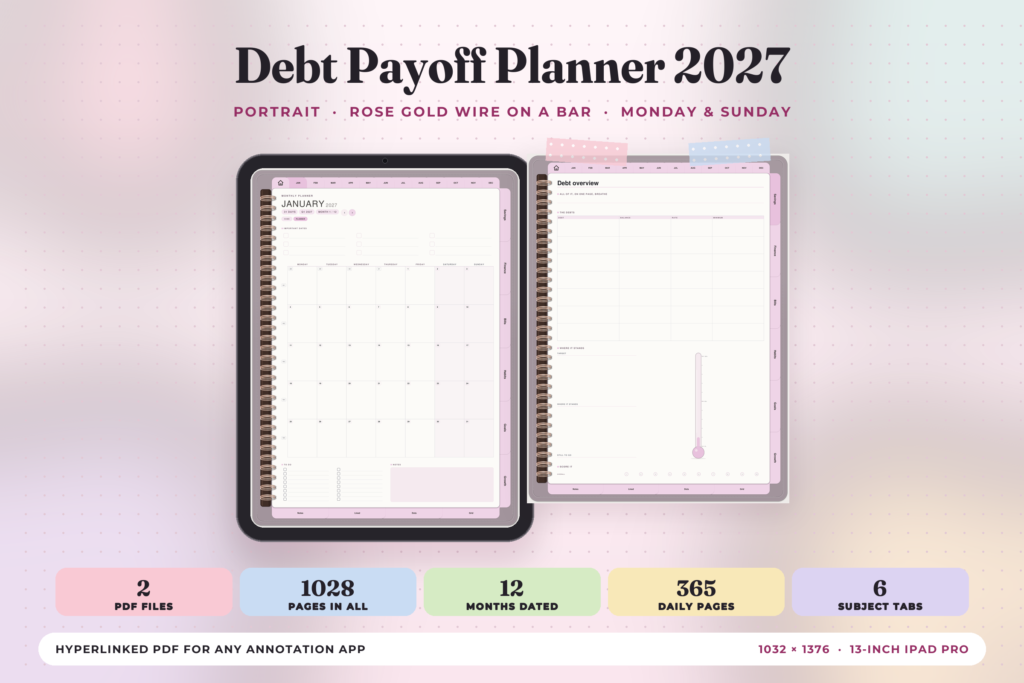
Format: Hyperlinked PDF
Pages: 513
Layout: Portrait, Monday or Sunday start
Best for: paying off debt with a full daily planner on iPad
- Savings, finance, bills, habits, goals and growth tabs
- 12 monthly and weekly pages for every week of 2027
- 365 daily pages with an hourly schedule
- 24 subject templates and note pages
Debt and habit pages sit inside your daily plan, which keeps the goal in view every day. Rose gold details give it a polished look.
Best Snowball Tracker
5. Debt Snowball Tracker – Printable & Digi

Format: PDF + digital version
Size: A4 and US Letter
Apps: GoodNotes, Notability
Best for: people following the debt snowball method
- Debt overview table, smallest to largest
- Snowball payment tracker and monthly payment log
- Progress chart
- Motivation and notes section
Listing debts from smallest to largest makes the next target obvious. Use it on a tablet or print it for a budget binder.
Best Debt Printable Bundle
6. Debt Tracker Bundle | Print Template

Format: Printable
Best for: tracking credit cards, loans and bills together
- Debt overview and monthly debt payment tracker
- Debt snowball and avalanche planner
- Credit card and loan payment tracker, interest rate comparison chart
- Bill checklist, savings goal and financial goals pages
The interest rate comparison chart makes it clear which debt costs the most each month. Bill and savings pages keep the whole plan in one binder.
Best Editable Debt Log
7. Debt Payoff Planner – CANVA Editable
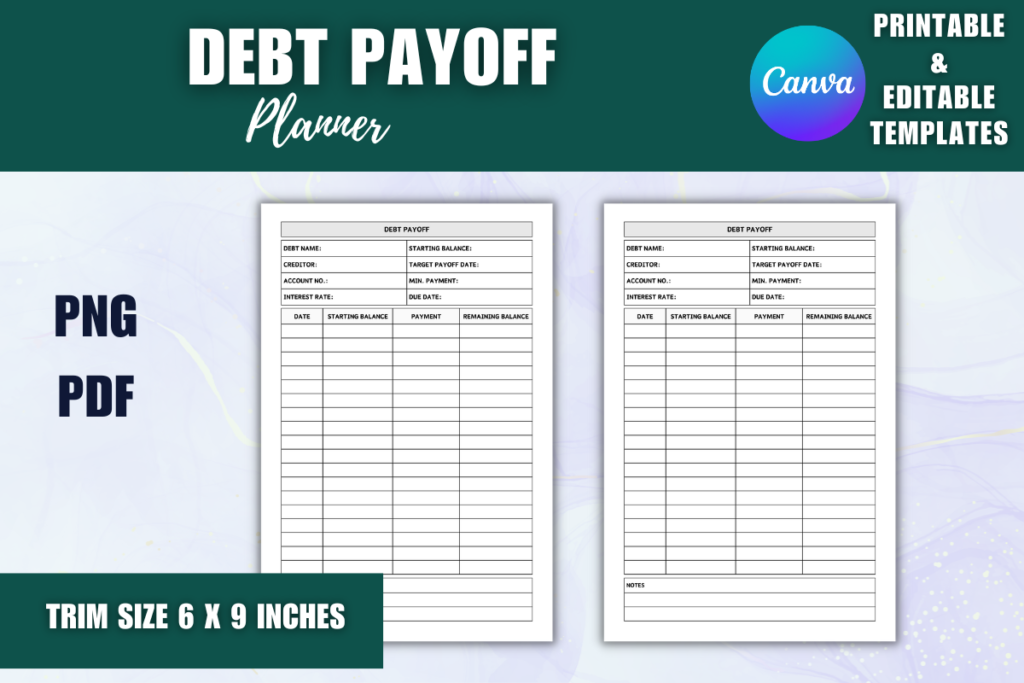
Format: Canva + PDF + PNG
Pages: 11
Size: 8.5 x 11 in
Best for: a detailed log for every account
- Debt name, creditor and account details
- Target payoff date, interest rate and minimum payment
- Credit limit, starting balance, payment and remaining balance
- Notes
One page per debt keeps every detail in one place when you call a lender. Edit colors and fonts in Canva before printing.
Best One-Page Debt Tracker
8. Debt Payoff Tracker Budgeting PDF
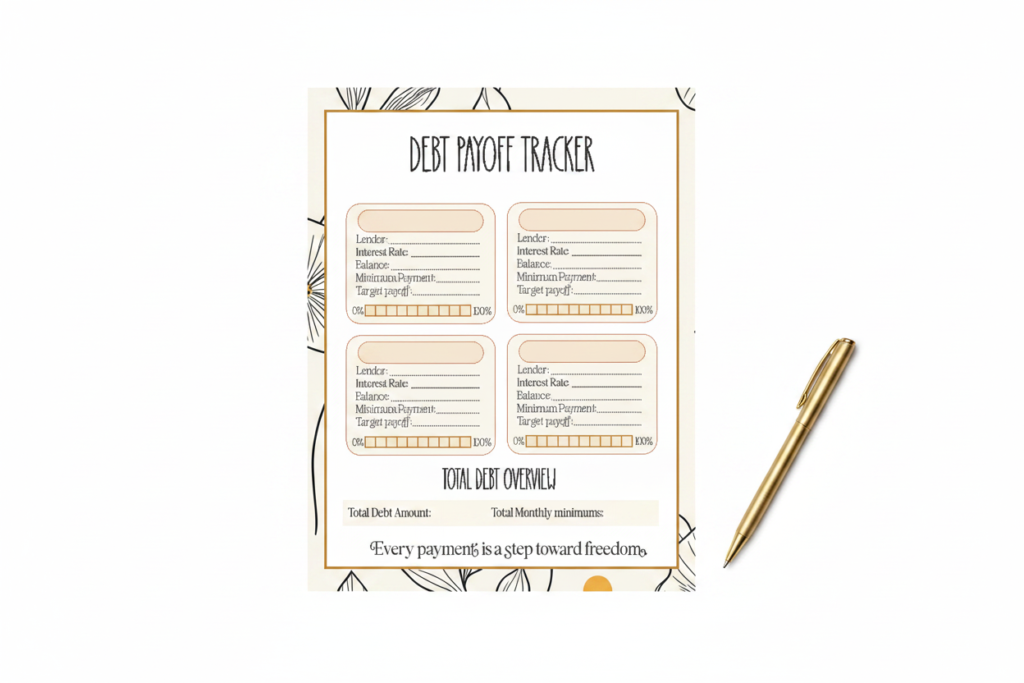
Format: Printable PDF
Pages: 1
Size: 8.5 x 11 in
Best for: a simple tracker for up to four debts
- Lender details, interest rates and balances
- Progress bar to color in for each debt
- Room for 4 debts
A single page is easy to keep on the fridge as a daily reminder. Watching each bar fill up keeps motivation high.
Debt Payoff Spreadsheets
Let formulas work out your payoff date and the interest you save.
Best Debt-Free Countdown
9. Debt Payoff Tracker Template

Format: Google Sheets, Excel, Numbers
Tabs: 4
Best for: seeing exactly how many months are left until you are debt-free
- Debts tab with formulas already written
- Dashboard with total debt, minimum payments and extra payment
- Months to debt-free calculated as you type
- Start Here guide and sample data
Changing the extra payment shows right away how much sooner the debt is gone. It opens in Google Sheets, Excel and Apple Numbers.
Best Method Switcher
10. Debt Payoff Planner & Tracker

Format: Excel and Google Sheets
Theme: Elegant
Best for: comparing snowball, avalanche and a custom order
- Choose snowball, avalanche or a custom plan
- Repayment timeline and payoff dates
- Interest paid and extra contributions
- Progress visuals
Switching methods shows how the payoff date and total interest change. A step-by-step guide helps first-time spreadsheet users.
Save Ahead While You Pay Off Debt
Sinking funds cover known costs, so a car repair or holiday does not go on a credit card.
Best Sinking Funds Tracker
11. Sinking Funds Tracker Printable

Format: Printable PDF + fillable PDF
Pages: 19
Size: US Letter and A4
Best for: saving ahead for gifts, car repairs and vacations
- How sinking funds work, with examples
- Planner for total, deadline and amount per month
- 12 fund pages with 40 color-in jars each
- Monthly deposits checklist and fund balances overview
Sinking funds turn big yearly costs into small monthly amounts, so they stop wrecking the budget. Color-in jars make saving visible.
Debt Payoff Planners at a Glance
| Type | Best for | Key features | Format |
|---|---|---|---|
| Debt workbooks | A full payoff plan | Snowball or avalanche, debt list, milestones | PDF, fillable PDF, Canva |
| Simple trackers | Quick daily motivation | Progress bars, payments, balances | |
| Debt spreadsheets | Automatic payoff dates | Snowball, avalanche, months to debt-free | Google Sheets, Excel |
| Digital planner | iPad users | Debt tabs inside a 2027 daily planner | Hyperlinked PDF |
| Sinking funds | Avoiding new debt | Monthly amounts for known costs | PDF, fillable PDF |
How to Make a Debt Payoff Plan
- List every debt. Write the balance, interest rate, minimum payment and due date.
- Choose a method. Snowball targets the smallest balance first, avalanche the highest rate.
- Pay all minimums. Late fees and missed payments make debt grow faster.
- Find extra money. Put cut spending, side income or windfalls toward one target debt.
- Roll payments forward. When one debt is gone, add its payment to the next one.
- Celebrate milestones. Mark each paid-off debt to stay motivated.
FAQ
Is the debt snowball or avalanche better?
The avalanche method usually saves more interest because it targets the highest rate first. The snowball method pays the smallest balance first, which gives quick wins and can keep people motivated.
How do I start paying off debt?
Make a list of all your debts, keep paying every minimum, and send any extra money to one debt at a time. A tracker helps you see progress and stay consistent.
Should I save or pay off debt first?
Many people build a small emergency fund first so a surprise bill does not go on a credit card, then focus on high-interest debt. The right balance depends on your rates and situation.
What is a sinking fund?
A sinking fund is money you set aside each month for a cost you know is coming, like car repairs, gifts or insurance. It helps you avoid borrowing for those expenses.
When should I get help with debt?
If you cannot make minimum payments, are getting collection calls or are thinking about bankruptcy or debt consolidation, talk to a nonprofit credit counselor or a qualified financial adviser. A planner is a tool for organizing, not financial or legal advice.
Final Thoughts
A debt payoff planner keeps the goal in front of you and turns every payment into visible progress. Pick a full workbook if you have several debts, a one-page tracker for quick motivation or a digital planner if you live on your iPad, and add a sinking funds tracker so new costs do not become new debt. For background on repayment strategies, see this article on debt.