Weight Loss Planners: 8 Best Printable and Digital Trackers
A weight loss planner helps you see what you eat, how you move and how you feel, so you can spot what works for you. This list includes complete weight loss planners, a planner with an intermittent fasting tracker, a digital planner, a daily page, a large health and fitness bundle and a simple body measurement tracker. Most are editable in Canva and ready to print.
Quick Picks
- Best complete planner: 32 Pages Weight Loss Planner
- Best for intermittent fasting: Weight Loss Planner | Canva Template
- Best digital option: Digital Weight Loss Planner
- Best daily page: Daily Weight-Loss Planner
- Best large bundle: Health & Fitness Planner Canva Templates
Complete Weight Loss Planners
These weight loss planners cover goals, food, workouts and progress in one set.
Best Complete Planner
1. 32 Pages Weight Loss Planner

Format: Canva template, printable
Pages: 32
Editable: Yes, with a free Canva account
Best for: anyone starting a weight loss plan who wants every tracker in one place
- Daily weight tracker, meal and calorie logs
- Workout and activity tracker, habit checklist and water tracker
- Progress monitoring and goal setting sheets
- Reflection and motivation pages
It covers food, movement, habits and mindset, so you do not need separate sheets for each. Change colors, fonts and sections in Canva, then print as many copies as you need.
Best for Intermittent Fasting
2. Weight Loss Planner | Canva Template

Format: Canva template, printable
Pages: 29
Editable: Yes
Best for: people who follow intermittent fasting or count calories
- Weight loss vision, starting point, short and long-term goals and milestone rewards
- Weight trackers, body measurements, before and after pages and a non-scale victories log
- Meal planner, food log, calorie tracker, intermittent fasting tracker, grocery list and recipe cards
- Workout log, steps tracker, 30-day fitness challenge, sleep, mood, cravings and period trackers
The non-scale victories log helps you notice progress that the scale does not show, such as better sleep or looser clothes. The cravings and triggers log shows patterns behind snacking.
Best Digital Option
3. Digital Weight Loss Planner

Format: Digital planner
Sections: 6
Best for: people who prefer to plan on a tablet
- Vision and goals: motivation, baseline overview, short and long-term goals, milestone rewards
- Progress and results: weight and body measurement trackers, before and after pages
- Food and nutrition: meal planner, food log, calorie and intermittent fasting trackers, recipe cards
- Fitness, habits and wellness, plus a daily weight loss journal and weekly review
Pages are grouped into clear sections, so it is quick to find the tracker you need. The weekly review helps you adjust your plan instead of starting over.
Best for Workouts
4. Weight Loss Journal| Fitness Planner

Format: PDF, PNG, JPG + Canva link
Pages: 32
Best for: combining weight loss with a regular workout routine
- Workout planner and weekly habit tracker
- Weekly measurements and weight tracker
- 30-day total body challenge and milestone rewards
- Supplement tracker, motivation and fitness reflection pages
The 30-day total body challenge gives you a clear first month to aim for. Use the ready PDF or PNG files, or change the design in Canva.
Best Large Bundle
5. Health & Fitness Planner Canva Templates

Format: Canva templates, printable
Templates: 63
Size: A4 and US Letter
Best for: people who want weight loss, fitness and health records in one binder
- My Journey overview, before and after sheet, weight and weight loss trackers
- Food journal, calorie tracker, weekly meal plan and 28-day diet worksheet
- Walking, running, strength, yoga and steps logs
- Doctor visit prep sheet, prescriptions, vitamins and water trackers
The doctor visit prep sheet is handy for writing down questions before an appointment. Pages are made to edit in Canva and fill in by hand, not to type into as a fillable PDF.
Best Floral Design
6. Flowers Weight Loss CANVA Planner
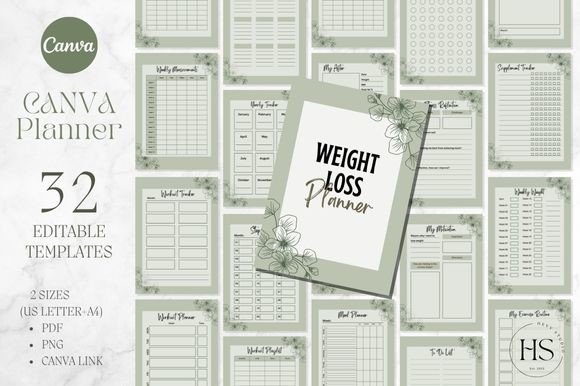
Format: PDF, PNG + Canva link
Size: A4 and US Letter
Best for: people who want a pretty planner they enjoy opening
- Weight tracker, weekly weight and weight loss tracker
- Meal planner, calories tracker and shopping list
- Workout planner, workout log, step tracker, running log and workout playlist
- Before and after pages, yearly goals, milestone reward and fitness reflection
A soft floral design makes daily tracking feel less like a chore. The workout playlist page is a fun extra for planning your training music.
Daily Pages and Simple Trackers
Prefer something lighter? These pages take only a few minutes a day.
Best Daily Page
7. Daily Weight-Loss Planner

Format: Canva template, printable
Editable: Yes, with a free Canva account
Best for: people who like to track one day on one page
- Meals and calories
- Workouts and water intake
- Habits and mood
- Daily reflection space
One page a day keeps tracking quick, which makes it easier to stay consistent. Edit the categories in Canva so the page fits your own plan.
Best Single Tracker
8. Weight Loss Tracker – Canva Template

Format: PDF, PNG + Canva link
Size: 8.5 x 11 in
Best for: people who only want to log weight and body measurements
- Body measurement tracker
- Weight loss tracker
- Editable in Canva
Measurements often change before the scale does, so this sheet shows progress that is easy to miss. Pin it next to your mirror or add it to any planner binder.
Weight Loss Planners at a Glance
| Type | Best for | Key features | Format |
|---|---|---|---|
| Complete planners | A full plan in one place | Goals, meal and calorie logs, workouts, progress | Canva, PDF, digital |
| Large bundle | Health and fitness records | 63 templates, food, exercise, doctor visits | Canva, A4 and US Letter |
| Daily pages and trackers | Quick daily tracking | Meals, water, mood, measurements | Canva, PDF, PNG |
How to Use a Weight Loss Planner
- Write your starting point. Note your weight, measurements and how you feel today.
- Set small goals. A weekly goal, like three walks or more vegetables, is easier to keep than a big one.
- Plan meals ahead. Fill in the meal planner and grocery list before the week starts.
- Track a few things daily. Food, water and movement are enough to see patterns.
- Measure, not only weigh. Measurements and non-scale victories show progress the scale misses.
- Review every week. Keep what worked and change one thing that did not.
FAQ
How do I start a weight loss journal?
Begin with your starting weight, measurements and a few reasons you want to change. Then write down what you eat, how you move and how you feel each day. Even short notes help you see patterns over time.
How much weight is safe to lose per week?
Many health organizations suggest a gradual pace of about 1 to 2 pounds (0.5 to 1 kg) per week for most adults. Slower, steady changes are usually easier to keep. Your own safe pace depends on your health, so ask your doctor.
What should I track when trying to lose weight?
Common things to track are food and drinks, water, activity, sleep and your weight or measurements once a week. Tracking cravings and mood can also show what triggers snacking.
Is it better to track weight daily or weekly?
Daily weight can jump up and down because of water, salt and hormones. Many people prefer to weigh once a week at the same time and focus on the trend, along with body measurements.
When should I talk to a doctor about weight loss?
A planner is a tool for organizing habits, not medical advice. Talk to a doctor or registered dietitian before starting a new diet or fasting plan, especially if you have a health condition, take medication, are pregnant or have a history of eating disorders. Also see a doctor if you lose weight without trying.
Final Thoughts
The best weight loss planner is one you will open every day. Choose a complete planner if you want everything in one place, or a daily page or single tracker if you prefer to keep it simple. Weight loss planners work best with small goals, honest notes and a weekly review. For general background, see this article on weight loss.